How to Avoid UK Bank Account Rejections in 2026
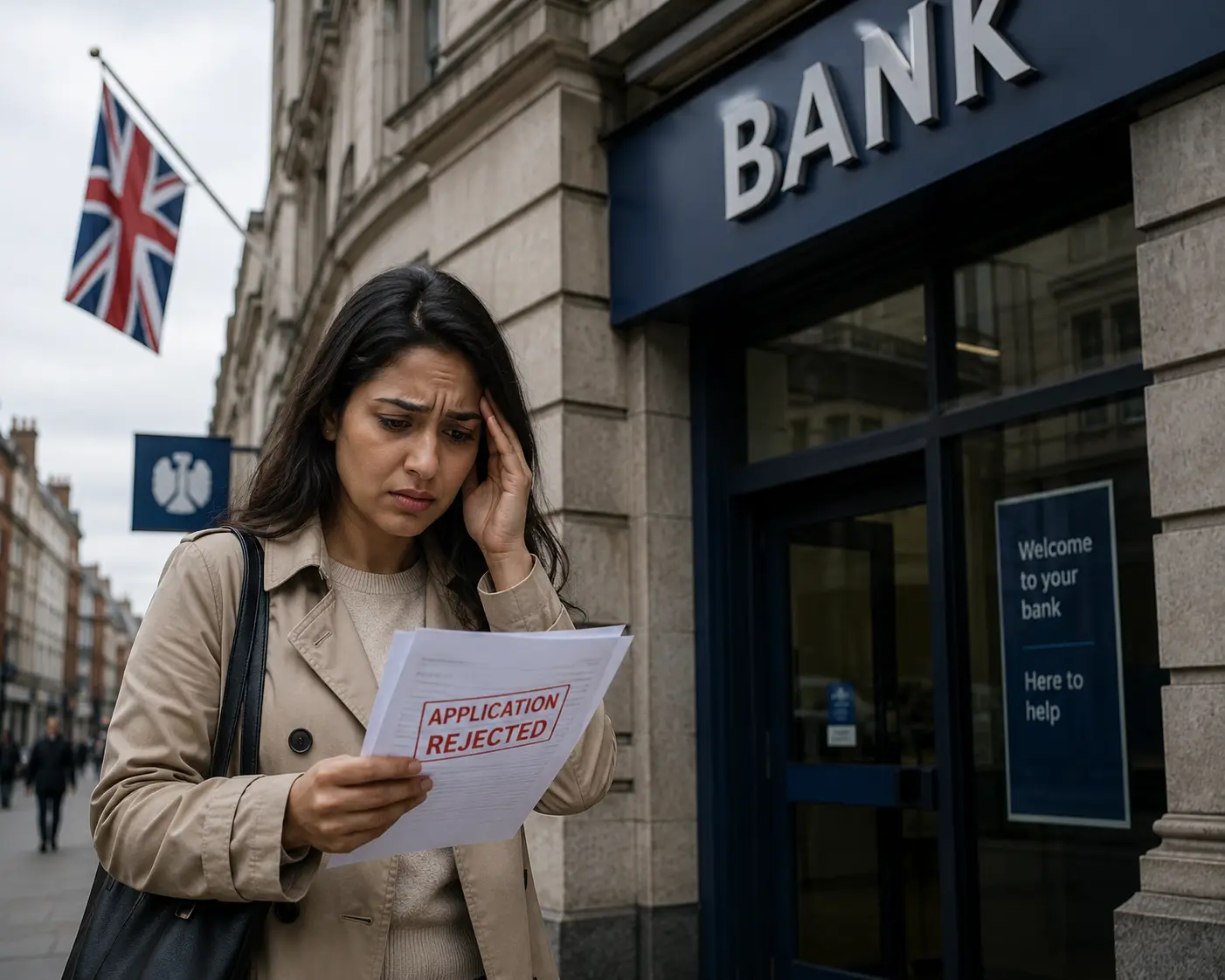
Opening a UK business bank account for non-residents has become significantly more challenging over the last few years. While thousands of overseas entrepreneurs successfully register UK companies every month, many face unexpected bank account rejections due to compliance requirements, missing documentation, or choosing the wrong banking partner.
The good news is that most UK bank account rejections are preventable.
Whether you’re applying for a digital bank account UK, a high street UK business bank account, or planning to open a UK business bank account from overseas, understanding what banks are looking for can dramatically improve your approval chances.
This guide explains the most common reasons applications fail, how to avoid them, and why many international founders choose to appoint a UK nominee director to strengthen their banking applications.
Why UK Banks Reject Non-Resident Applications
UK banks operate under strict regulations designed to prevent fraud, money laundering, and financial crime.
Banks now perform extensive due diligence before approving business accounts.
Common reasons include:
- Incomplete documentation
- Poor business explanation
- High-risk business activities
- Weak online presence
- Director residing in a high-risk jurisdiction
- Unclear source of funds
- Inability to verify company operations
- No UK business connection
- Previous banking issues
- Incorrect application information
Even small inconsistencies can trigger automatic rejection.
The Growing Challenge for Non-Residents
Many overseas entrepreneurs assume that incorporating a UK Limited Company automatically guarantees banking approval.
Unfortunately, this is no longer true.
Today’s banks evaluate:
- Company legitimacy
- Expected transaction volume
- Countries of operation
- Industry risk
- Beneficial ownership
- Directors
- Customers
- Suppliers
- Tax compliance
- Business website
- Professional email
- Financial projections
The stronger your overall business profile, the higher your approval chances.
Digital Banks vs High Street Banks
One of the biggest decisions is choosing between a digital bank account UK and a traditional high street UK bank account.
Digital Banks
Digital banking providers usually offer:
- Faster applications
- Remote onboarding
- Multi-currency accounts
- International payments
- Accounting integrations
- Lower fees
- Faster approval
Popular digital banking providers include:
- Wise Business
- Airwallex
- Revolut Business
- Anna Money
- Tide
- Payoneer
- Countingup
Digital providers are often preferred by startups and international businesses because applications can frequently be completed online.
However, approval is never guaranteed.
High Street Banks
Traditional UK banks generally require deeper compliance checks.
Examples include:
- Barclays
- HSBC UK
- Lloyds Bank
- NatWest
- Santander UK
- Metro Bank
Advantages include:
- Greater banking reputation
- Higher payment limits
- Larger lending options
- Better long-term banking relationships
However, high street banks may request:
- Additional verification
- Business plans
- Financial forecasts
- UK business activity
- Director interviews
- Proof of trading
Approval usually takes longer compared to digital banking providers.
Top 15 Reasons UK Bank Accounts Get Rejected
1. Poor Business Website
Banks increasingly review company websites.
A website with only one page or little information can create doubts.
Include:
- Services
- Contact details
- Company registration number
- Privacy Policy
- Terms
- Business address
2. No Professional Email Address
Avoid Gmail, Yahoo or Outlook for official banking applications.
Instead use:
This improves business credibility.
3. High-Risk Business Activities
Certain industries receive greater scrutiny.
Examples include:
- Cryptocurrency
- Gambling
- Adult services
- Money services
- Forex
- Investment schemes
Always explain your business model clearly.
4. Inconsistent Information
Your company information should match across:
- Companies House
- Website
- Bank application
- Invoices
- Business plan
Even different addresses may delay approval.
5. Weak Source of Funds
Banks need confidence that your capital comes from legitimate sources.
Provide supporting documents whenever requested.
6. Poor Business Description
Instead of writing:
“We do consulting.”
Explain:
“We provide IT consulting and software implementation services to SMEs in the United States and Europe.”
Specific descriptions build confidence.
7. Missing Supporting Documents
Prepare:
- Passport
- Address proof
- Company incorporation certificate
- Shareholding details
- Business invoices
- Supplier contracts
- Customer agreements
- Website
- Business plan
8. High-Risk Countries
Applications from certain jurisdictions receive additional checks.
This does not mean rejection.
It simply means banks require stronger evidence.
9. No Expected Transaction Information
Banks usually ask:
- Monthly turnover
- Expected transfers
- Customer locations
- Supplier countries
Provide realistic estimates.
10. No Trading Evidence
If your company has started operating, include:
- Contracts
- Purchase orders
- Client invoices
- Signed agreements
11. No Online Presence
LinkedIn company page
Google Business Profile
Professional website
Business email
These help demonstrate legitimacy.
12. Incorrect SIC Codes
Your Companies House SIC codes should accurately reflect your business activities.
13. Applying to the Wrong Bank
Every bank has different risk criteria.
Choosing the right banking partner significantly increases success.
14. Frequent Reapplications
Applying to multiple banks immediately after rejection may negatively affect future applications.
Instead, understand why the previous application failed before reapplying.
15. Lack of UK Business Presence
Banks prefer companies with some connection to the UK.
Examples include:
- UK customers
- UK suppliers
- UK office
- UK employees
- UK nominee director
Can a UK Nominee Director Improve Bank Approval?
Many international entrepreneurs ask whether appointing a UK nominee director can help.
The answer depends on the bank and the overall strength of the application.
A nominee director surely improves bank account approval, but in some situations it can make an application more credible by strengthening the company’s UK operational profile.
Potential benefits include:
- Demonstrates a stronger UK management presence.
- Can help banks understand how the business will be managed in the UK.
- May simplify communication where a UK-based point of contact is useful.
- Can support businesses with genuine UK commercial operations.
It is important that any nominee director arrangement is genuine, transparent, and compliant with UK laws. Banks will still identify and verify the ultimate beneficial owners (UBOs) and assess the overall business risk. A nominee director should never be used to conceal ownership or misrepresent who controls the company.
For many overseas founders with legitimate UK business plans, combining a well-documented business, strong compliance, and an appropriate nominee director arrangement can improve the overall quality of the application.
Digital Banks Suitable for Many Non-Resident Businesses
Depending on your business model and eligibility, many overseas entrepreneurs explore:
- Wise Business
- Airwallex
- Revolut Business
- Tide
- Anna Money
- Payoneer
- Countingup
Each provider has different eligibility requirements, supported countries, and compliance standards. Comparing them before applying can save time and reduce unnecessary rejections.
High Street Banks That May Consider International Businesses
Some established UK banks offer business banking services to companies with overseas owners, subject to their eligibility criteria and due diligence.
These include:
- Barclays
- HSBC UK
- Lloyds Bank
- NatWest
- Santander UK
- Metro Bank
High street banks generally expect stronger evidence of genuine UK business activity than many digital providers.
Checklist Before Applying for a UK Business Bank Account
Before submitting your application, make sure you have:
- ✔ UK Limited Company registered
- ✔ Professional business website
- ✔ Business email address
- ✔ Clear business plan
- ✔ Customer and supplier information
- ✔ Proof of source of funds
- ✔ Expected transaction volumes
- ✔ Accurate SIC codes
- ✔ Companies House information matching all documents
- ✔ Passport and proof of address
- ✔ Invoices or contracts (if available)
- ✔ Strong explanation of your business activities
Completing this checklist can significantly improve the quality of your application.
How Activate Global Limited Supports Non-Residents
Applying for a UK business bank account for non-residents can be time-consuming, especially if you’re unfamiliar with UK banking requirements.
Activate Global Limited supports overseas entrepreneurs by helping them:
- Register a UK Limited Company.
- Prepare compliant application documentation.
- Choose the right banking partner that align with their business model and eligibility.
- Understand the differences between digital banking providers and high street banks.
- Arrange registered office services.
- Provide UK nominee director services where appropriate and suitable for the client’s needs.
- Guide clients through the bank application process from start to finish.
While no provider can guarantee approval from an independent bank, careful preparation and choosing the right banking route can greatly improve the likelihood of a successful application.
Case Study 1 – Software Company from India
An Indian software development company incorporated a UK Limited Company to serve clients in Europe.
Initially, their bank application was declined because the business website lacked detail and they had no supporting customer contracts.
After improving their website, preparing a clear business plan, providing signed client agreements, and strengthening their application with professional documentation, they successfully obtained a UK business banking solution through an appropriate digital banking provider.
Case Study 2 – UAE E-commerce Business
A UAE-based entrepreneur wanted to collect payments from UK customers.
Their first application failed because expected transaction volumes and supplier information were incomplete.
After revising the application, providing realistic financial projections, and submitting supplier agreements, they were approved for a suitable business account.
Case Study 3 – Marketing Agency from Pakistan
A digital marketing agency serving UK clients sought business banking for its new UK company.
The founders improved their online presence, clarified their business model, prepared compliance documents, and appointed a UK nominee director to support their UK operational structure.
Following a more comprehensive application, they secured an appropriate UK business banking solution after completing the bank’s due diligence process.
Frequently Asked Questions
Our team handles company formation, nominee appointment, and legal documentation. No UK visit required. 95+ countries accepted.